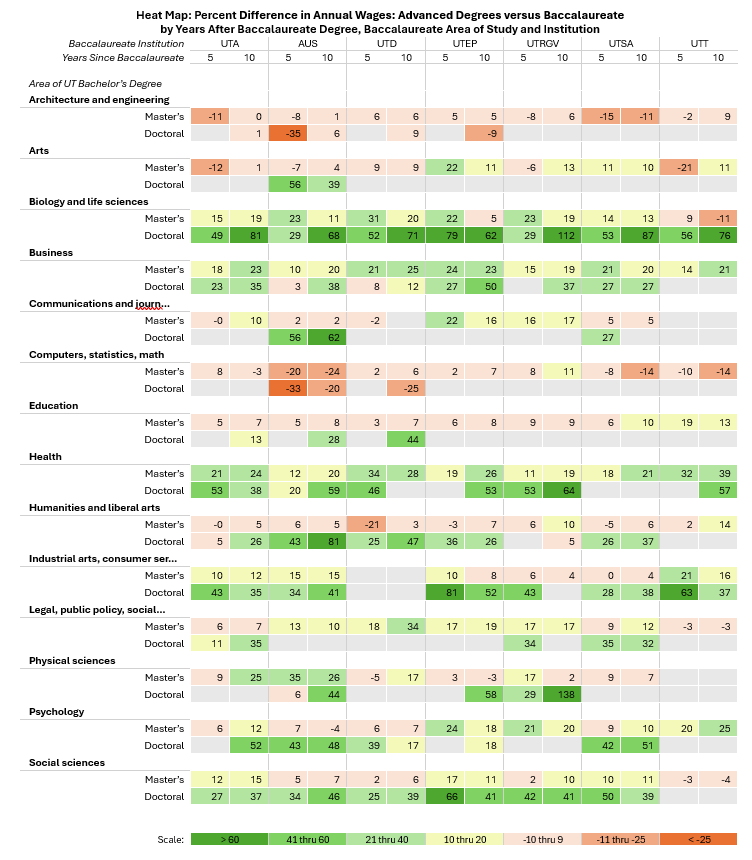
Graduate degrees benefit both the public good--through research, education, and healthcare--and the individual earning the degree. As an individual, getting your graduate degree is intended to advance your specialized knowledge and skills, boost your career, and, it is hoped, increase your earnings. Examining that earnings differential—the change in earnings for those who earn a graduate degree compared to those who do not—is one of the ways we look at the (financial) value of those degrees. This report examines the earnings differential in detail, including analysis on how that financial impact varies. In addition to the full report, which is comprehensive and includes additional contextual information from a variety of sources, there are shorter versions that examine specific breakdowns, focused exclusively on this UT System analysis, and sometimes in greater detail than the full report.
- Graduate Degrees: The Full Report
- Graduate Degrees: Key Findings (two-page summary of findings)
- Graduate Degrees: Focus on Master's Degrees
- Graduate Degrees: Focus on Doctoral Degrees
- Graduate Degrees: A Closer Look at Baccalaureate Area of Study